
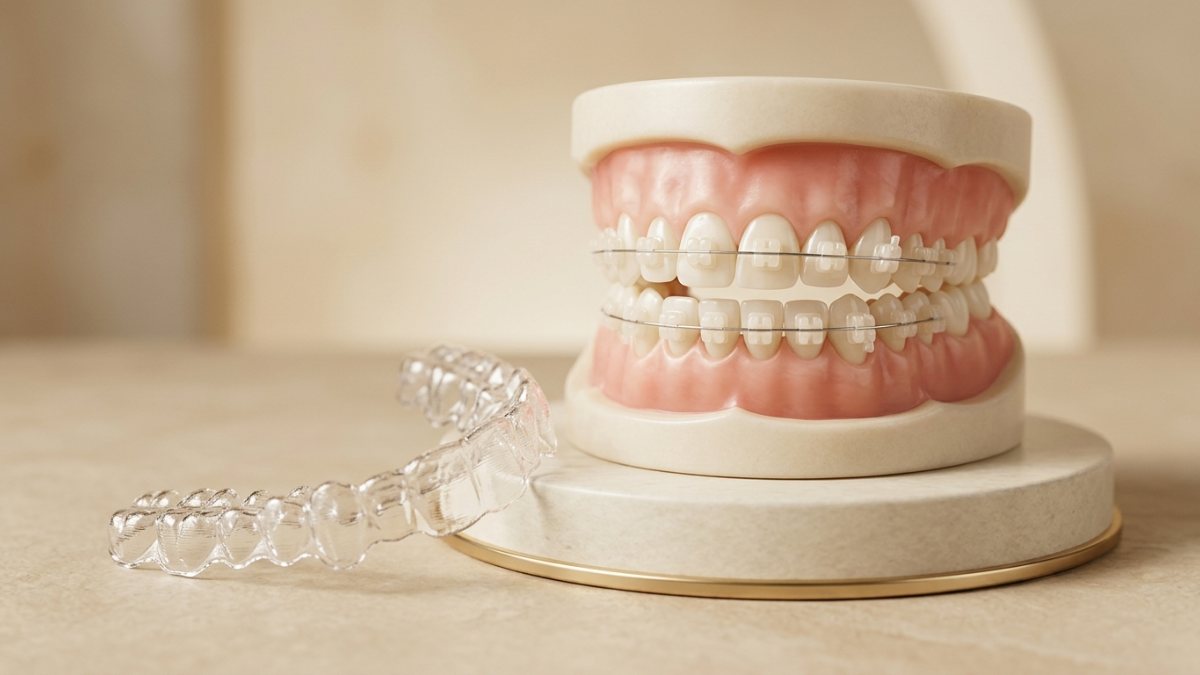
In short: orthodontic treatment moves teeth and corrects the bite with gentle, steady pressure over months. There are metal braces, clear (ceramic) braces and removable clear aligners. Treatment usually takes one to two years depending on the case, and afterwards a retainer is essential so the teeth don't move back.
Who needs orthodontics?
- Crowded or overlapping teeth.
- Gaps between teeth.
- A bite that doesn't fit: the upper or lower jaw too far forward, or teeth that don't meet.
- Teeth that are hard to clean because of how they're lined up.
Orthodontics isn't only cosmetic: straight teeth are easier to clean and less prone to decay and gum disease.
Types of braces
Metal braces
Small metal brackets on the teeth and a wire adjusted at each visit. The most widely used type, suitable for most cases — including complex ones.
Clear (ceramic) braces
The same idea as metal braces, but the brackets are tooth-coloured, so they're much less visible — for anyone who cares about the look.
Clear aligners
Clear trays replaced every so often, worn about 22 hours a day and taken out to eat and clean. They're almost invisible but need commitment, and not every case can be treated with them.
The right age
- Children: a first orthodontic check around age 7 is recommended, because some problems are easier to treat while the jaw is still growing.
- Teenagers: the most common age for braces.
- Adults: braces work at any age, as long as the teeth and gums are healthy.
How does treatment go?
- Examination and X-rays (usually a panoramic and a side skull X-ray), photos and impressions.
- A treatment plan with the expected duration.
- Fitting the braces, with adjustment visits roughly every four to six weeks.
- Removing the braces and fitting a retainer (fixed or removable).
Tips during treatment
- The first days may bring mild pain or pressure; this is normal and eases.
- Cleaning matters more than ever: an orthodontic toothbrush, floss or interdental brushes, and a fluoride mouthwash if your dentist recommends it.
- Avoid very hard or sticky foods (such as seeds and caramel) that can break brackets.
- Keep your appointments; delays make treatment longer.
The retainer isn't optional — teeth tend to drift back, and the retainer is what keeps the result.
To find out whether you need braces and which type suits you, book an assessment at our 6th of October branch or El Saff branch.
Frequently asked questions
How long does orthodontic treatment take?
Do braces hurt?
Can adults have braces?
Do I have to wear a retainer?
More articles
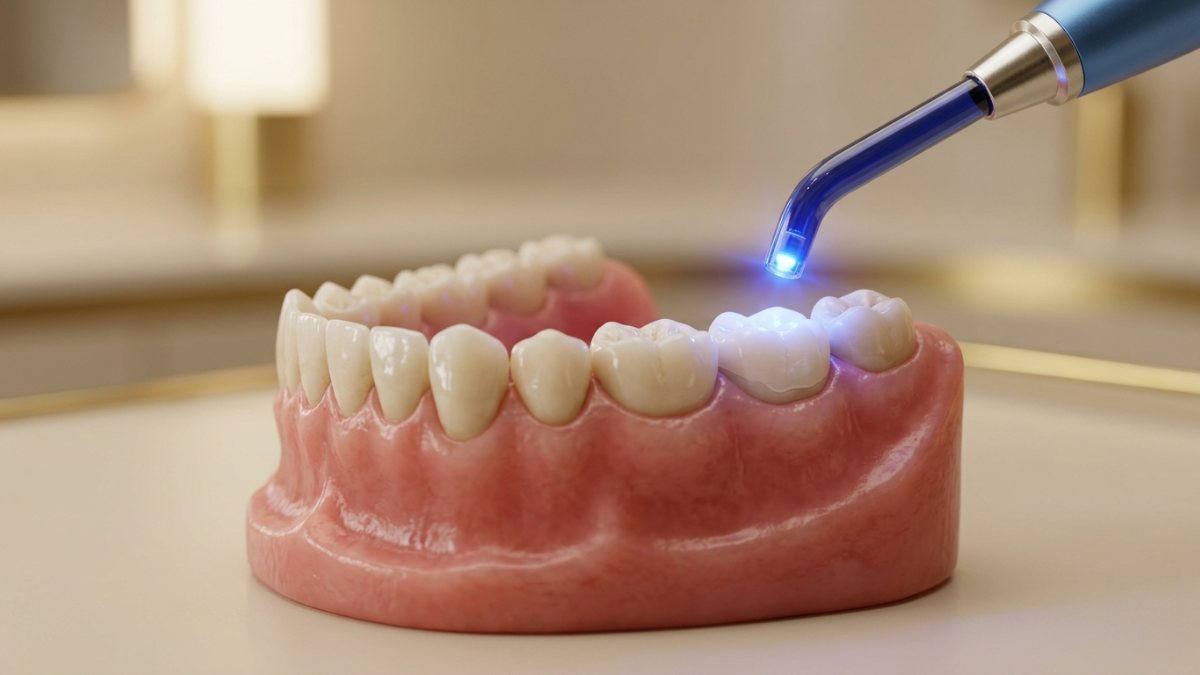
Cosmetic fillings: when you need one, how long it lasts
What a tooth-coloured cosmetic filling is, when it's used for decay, chips and gaps, the steps, and how long it lasts — from Future Dental Center.
Read the article →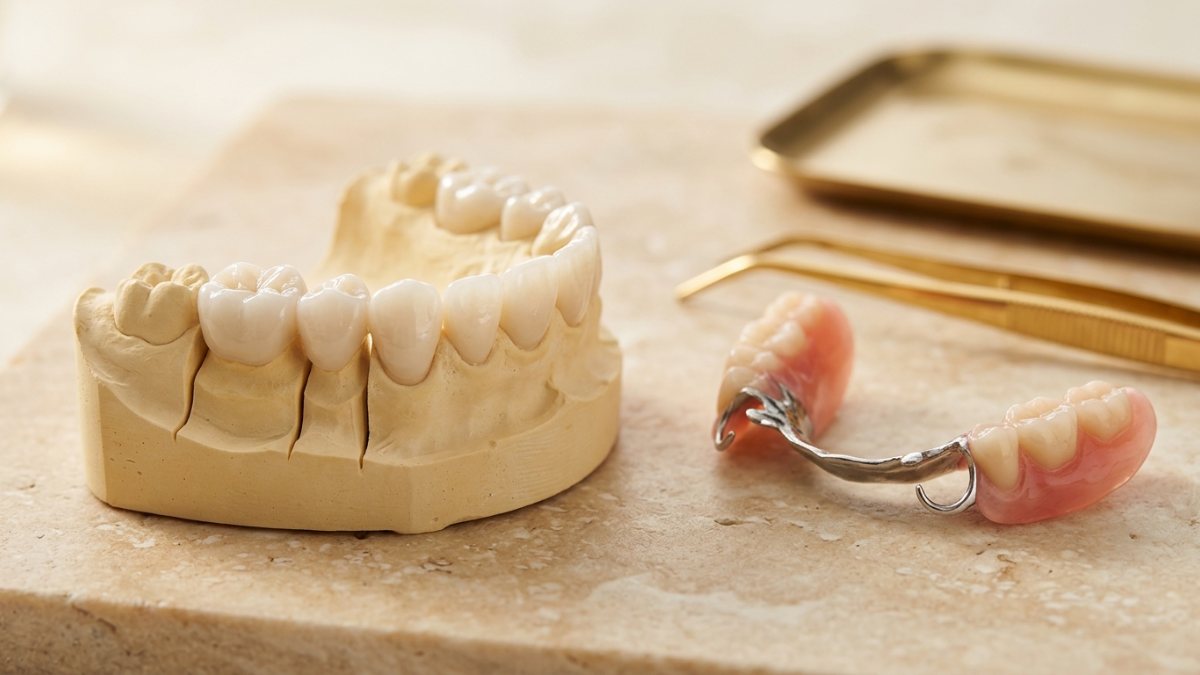
Dental crowns, bridges and dentures: which do you need?
Crowns, bridges and dentures explained: when each is used, the materials, and how to care for them — from Future Dental Center.
Read the article →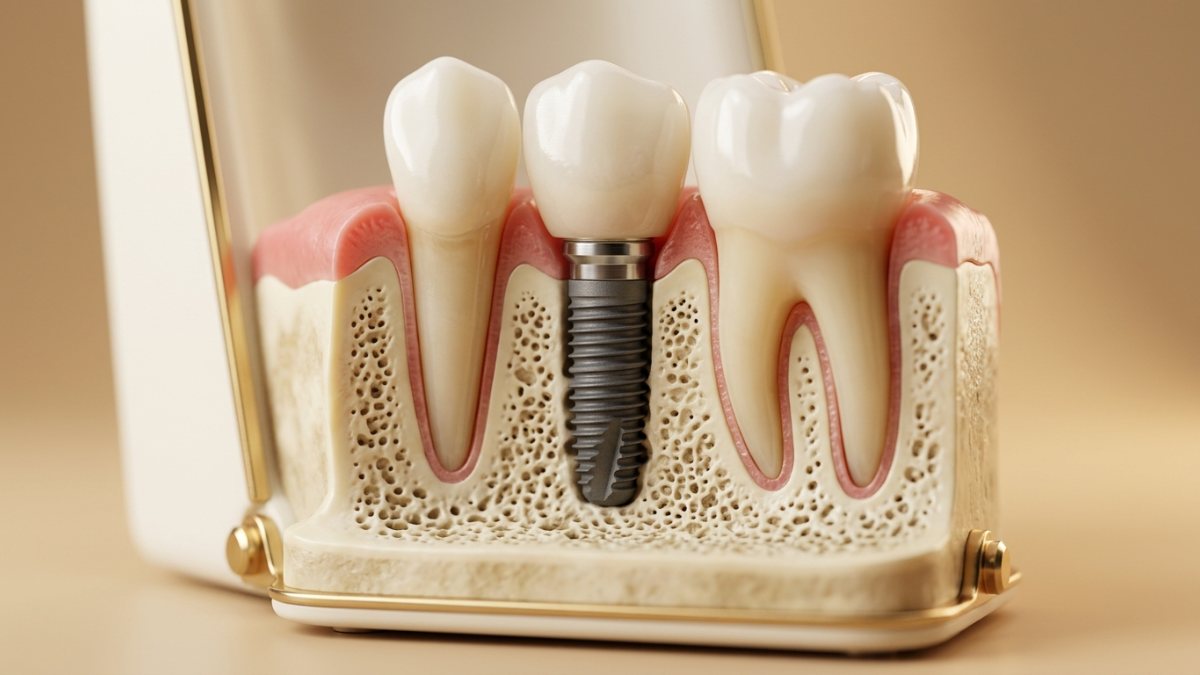
Dental implants: what to know before you start
What dental implants are, who they suit, how long treatment takes and how to look after them — a simple guide from Future Dental Center.
Read the article →