
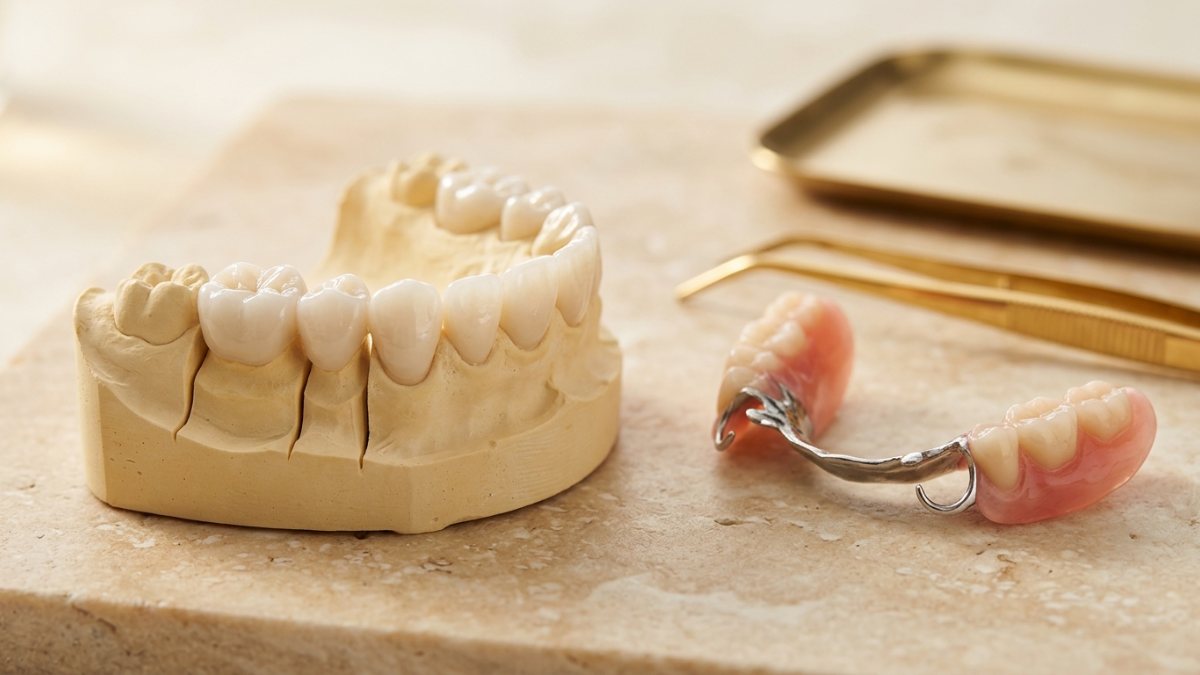
In short: dental prosthetics restore teeth that are broken, weak or missing. A crown covers an existing tooth to protect it, a bridge replaces a missing tooth by resting on the teeth beside it, and a denture replaces several teeth or a whole jaw. The right choice is made after an examination and X-rays.
Crowns
A crown is a tooth-shaped cap fitted over a weak tooth to protect it and restore its shape. It is usually needed:
- after a root canal in some cases on a back tooth, because the tooth becomes weaker and may crack;
- for a broken tooth, or one with a very large filling;
- to improve a discoloured or misshapen tooth;
- on top of a dental implant, to make it look and work like a natural tooth.
Materials
- Zirconia: very strong, with a natural-looking colour; suits front and back teeth.
- E-max: highly translucent and very natural-looking; best suited to front teeth.
- Porcelain fused to metal: an older, more economical option.
The dentist chooses the material according to the tooth's position, your bite and your budget.
Bridges
When a tooth is missing, a bridge replaces it by resting on the teeth either side: those teeth are prepared and crowned, and the crowns are joined to an artificial tooth in the middle. A bridge is fixed (it doesn't come out) and takes less time than an implant, but it means preparing healthy teeth. That is why an implant is sometimes the better choice — your dentist will explain the difference in your case.
Dentures
- Partial removable denture: replaces a few teeth and clips onto the remaining ones.
- Complete denture: for a jaw with no teeth.
- Implant-supported denture: held on a small number of implants, so it is far more stable and comfortable for eating and speaking.
How does treatment go?
- Examination and X-rays to check that the roots and gums are healthy.
- Preparing the tooth, or the jaw, depending on the type of prosthesis.
- Taking an impression — usually with a temporary crown until the final one is ready.
- A try-in to adjust the bite and colour, then fitting.
Looking after your prosthesis
- Brush twice a day, and use floss or an interdental brush under bridges.
- Don't crack hard things with your teeth.
- Take removable dentures out to clean them every day, and keep them in water overnight.
- See your dentist every six months.
The crown itself can't decay, but the tooth underneath can, at the edge, if cleaning is poor.
If you have a broken or missing tooth, book a consultation at our 6th of October branch or El Saff branch and the dentist will recommend the right option.
Frequently asked questions
How long does a crown last?
Does getting a crown hurt?
Bridge or implant?
More articles
Cosmetic fillings: when you need one, how long it lasts
What a tooth-coloured cosmetic filling is, when it's used for decay, chips and gaps, the steps, and how long it lasts — from Future Dental Center.
Read the article →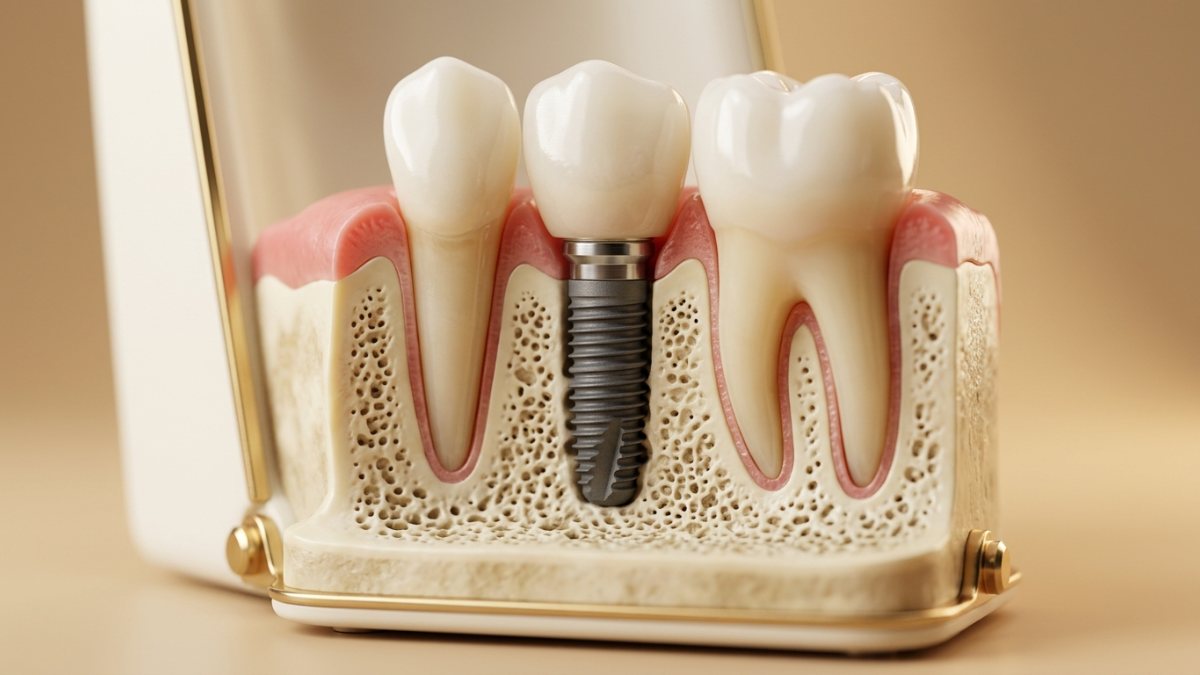
Dental implants: what to know before you start
What dental implants are, who they suit, how long treatment takes and how to look after them — a simple guide from Future Dental Center.
Read the article →
Fluoride for children: how it protects teeth, how often
How a fluoride session strengthens children's teeth and reduces decay, how often to have one, and is it safe — from Future Dental Center.
Read the article →